What Nationality Do I Look Like? AI Photo Guess vs Real Nationality
A face-based impression can be interesting, but it is not a passport, family tree, or DNA result. Here is how to use an AI photo guess responsibly.

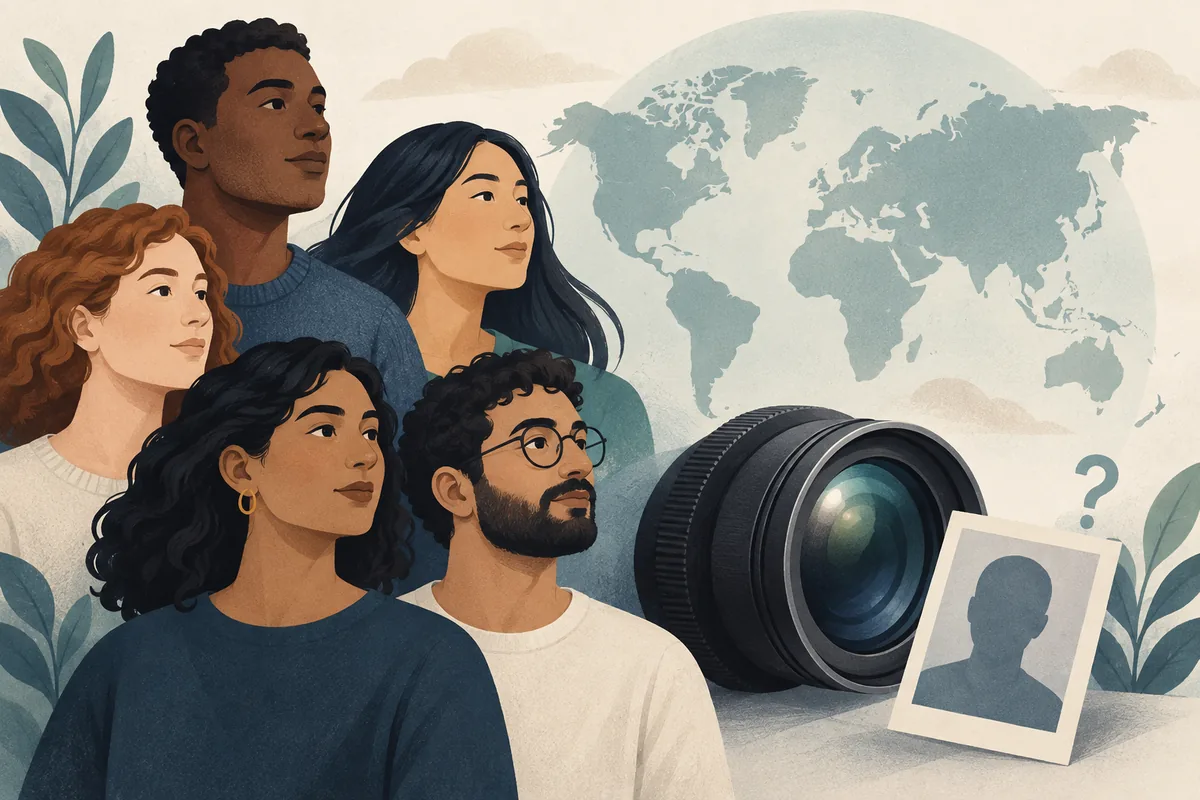
In this guide
The search query what nationality do I look like can hide several questions. You might be curious about visual resemblance, wondering whether a face can reveal family origin, or looking for a quick photo experiment. None of those is the same as proving nationality. This guide explains what an AI guess can describe, why it is limited, and which sources are better for ancestry, citizenship, or identity.
Quick answer: a photo can suggest an impression, not prove nationality
An AI photo tool may produce an appearance-based guess about what country or region you seem connected to. It is reading visible features, image context, and patterns learned from examples; it is not reading a passport, birth record, family tree, or genetic sample.
Nationality usually describes a legal or civic relationship with a country, while a visual guess describes how someone might interpret your appearance. A person can look like one place, hold citizenship in another, have ancestry from several regions, and identify with more than one community.
Key takeaway
Use a photo guess for curiosity about visual resemblance. Use family records, official documents, interviews, or DNA ancestry testing when the question is about real background.
What does “what nationality do I look like?” really mean?
People often use nationality as shorthand for appearance, even though a face does not carry a visible legal status. The phrase may mean regional resemblance, family origin, or cultural belonging. Name the question more precisely before interpreting a result; a visual tool, genealogy search, citizenship document, or DNA test may each fit a different goal.
- Visual resemblance Which places or communities might another person associate with your visible appearance?
- Family origin Where did your parents, grandparents, or earlier ancestors live, migrate from, or belong?
- Citizenship or nationality Which country legally recognizes you as a citizen or national under its rules?
- Cultural belonging Which languages, traditions, communities, and personal identities feel meaningful to you?
What can a photo show—and what can it not show?
A face photo contains visual information such as lighting, camera angle, expression, hairstyle, skin tone, and visible structure. An AI model can compare those signals with learned patterns and return a broad resemblance estimate, but the output depends on the image and the categories used by the model.
A photo cannot show citizenship, birthplace, language, family stories, cultural practice, or the genetic markers used in ancestry testing. Mixed heritage, migration, regional diversity, styling, and image quality make one visual label especially uncertain.
- Lighting and angle Shadows, lens distortion, cropping, and a turned face can change which features are most visible.
- Model categories An AI system may use broad regions or learned labels that do not match how a person describes their identity.
- Shared human variation Facial features overlap across borders and populations; no feature belongs exclusively to one nationality.
- Missing context The image does not contain your documents, family history, citizenship status, or self-identification.
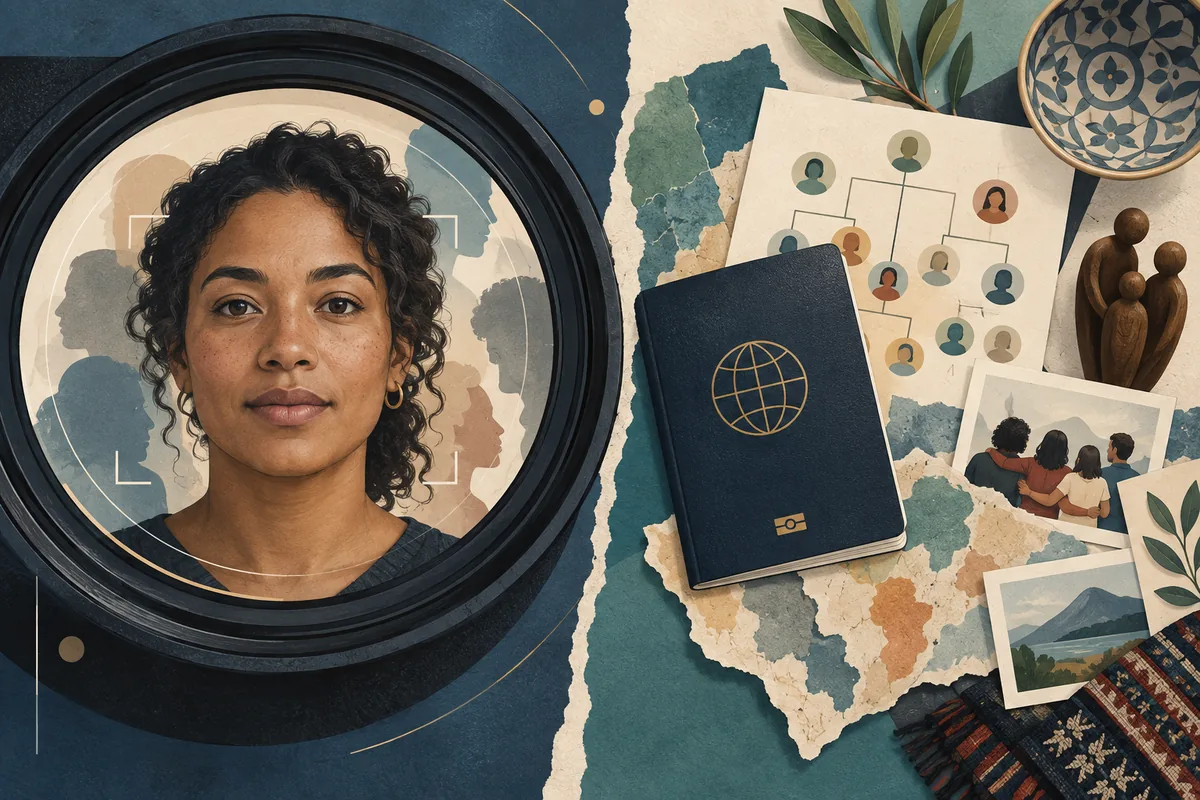
A visual impression is one layer of context; family history, documents, and DNA answer different questions.
How does an AI nationality or ethnicity guess work?
A photo tool generally receives an image, locates the face, extracts visual signals, compares them with learned examples, and summarizes nearby categories. A ranked result can look precise, but it is still a model output rather than a verified fact. Results may change with a side angle, low-resolution selfie, filter, group photo, or different lighting.
1. Face and image quality
The system checks whether a face is visible and how much usable detail the photo contains.
2. Visible pattern extraction
It represents features such as proportions, contours, and other pixels as numerical signals for comparison.
3. Category comparison
The model compares those signals with learned examples and returns a broad similarity estimate.
4. Human interpretation
You decide whether the result is a useful curiosity, a prompt for family-history research, or simply a reminder of model uncertainty.
Important note
A confident-looking percentage or label does not make a visual guess a nationality verification. Do not use it for legal, employment, school, border, or identity decisions.
Nationality vs ethnicity vs ancestry vs citizenship
These words overlap in everyday conversation, but they describe different kinds of information. Keeping them separate helps you choose the right evidence and use a photo-based result without overclaiming.
| Term | Usually describes | Best evidence |
|---|---|---|
| Nationality | A relationship to a nation or country, often legal or civic | Official records and the person’s own stated status |
| Ethnicity | Shared culture, language, history, community, or heritage | Self-identification, family history, and community context |
| Ancestry | Inherited family lines and geographic or historical origins | Genealogy, family records, and DNA results interpreted carefully |
| Citizenship | A formal legal status granted or recognized by a state | Citizenship documents and applicable government records |
| Appearance | A viewer’s impression based on visible traits | A photo or visual model, always limited and uncertain |
Responsible use, consent, and photo privacy
A face is personal data, and nationality or ethnicity can be sensitive. Use an image you have the right to upload, read the privacy information, and do not upload another person’s photo without consent. Never turn a visual estimate into a claim about a stranger or use it to stereotype, exclude, identify, or make a decision. The person remains the authority on their own identity.
- Ask for consent Do not analyze another person’s face or share their result without permission.
- Read the privacy terms Check how uploads are processed, whether they are retained, and whether you can request deletion.
- Avoid sensitive decisions A visual guess is not suitable for hiring, admissions, policing, border checks, or identity verification.
- Respect self-description A person’s own nationality, ethnicity, ancestry, and cultural identity should not be overwritten by an algorithmic guess.
How to learn about your real background
If the visual question leads to deeper interest in family origin, use evidence that matches the claim you want to make. No single source defines every part of identity.
1. Start with family conversations
Ask relatives about names, languages, places, migrations, traditions, and stories. Record uncertainty instead of turning memory into fact.
2. Check documents and records
Birth, marriage, immigration, census, and archive records can connect people to places and dates. Spelling changes and missing records are normal research problems.
3. Use DNA carefully
An ancestry test can offer genetic matches and population estimates, but provider reference data affects the result. It is not citizenship or cultural identity.
4. Choose your own labels
You decide which parts of family history and culture you want to claim, explain, or keep private.
Frequently asked questions
Bottom line
So, what nationality do you look like? An AI photo tool can offer a quick impression about visual resemblance, but it cannot see legal nationality, read DNA, or decide your identity. The result is most useful when it stays in that narrow lane: a light, uncertain prompt for curiosity.
If you want to explore the visual question, use a clear photo and treat the output as a model estimate. If you want to understand family origin or legal status, move to family conversations, records, official documents, or carefully interpreted DNA evidence.
The most accurate answer may be more nuanced than one country name. People can have several ancestral lines, multiple cultural homes, and a nationality that no face-based guess can reveal.
Further reading
- U.S. Department of State: nationality and citizenship information View source
- U.S. Census Bureau: race and ethnicity terminology View source
- National Human Genome Research Institute: genetic ancestry testing View source
About the author
Sophie Laurent
Sophie Laurent writes about identity, ancestry, family history, and the practical limits of AI and visual tools. Her work helps readers separate a playful appearance question from evidence about family background, legal nationality, and personal identity.
Last updated: Updated September 20, 2026