Can AI Detect Ethnicity from a Photo? What It Can and Can't Tell
A clear explanation of photo-based estimates, image-quality limits, DNA ancestry evidence, and safer ways to interpret an AI result.

In this guide
Searches for detect ethnicity from photo usually combine two different needs. Some people want a quick visual answer about what they may look like. Others want evidence about family history or inherited ancestry. A face photo can only address the first question, and even then the result is an estimate shaped by the image, the model, and the categories it was trained to use.
This guide explains what an AI ethnicity detector can describe from a photo, why the same person may receive different outputs from different images, and where the boundary lies between appearance, ethnicity, ancestry, nationality, and identity. If you want to try a visual tool, start with the limits below rather than treating a result as a test certificate.
Quick answer: AI can estimate appearance, not verify ethnicity
Yes, an AI photo tool can compare visible patterns in an image and return an appearance-based ethnicity estimate. That is why people search for ethnicity by photo, AI ethnicity detector, or guess ethnicity by photo. The output describes how the image may resemble broad learned patterns; it does not reveal a hidden ethnicity stored in the face.
A photo model cannot read your DNA, family tree, cultural belonging, citizenship, or personal self-identification. It can also be wrong because the photo is dark, blurry, filtered, cropped, or unusual, or because the model's training data and categories do not represent every person equally.
Key Takeaway
Use a photo result as a tentative visual impression. Use DNA testing, family records, community history, and your own self-identification for questions about inherited ancestry and identity.
What an AI photo model can see
A visual model receives pixels. Depending on the tool, it may detect a face, estimate landmarks, compare broad shapes, and identify patterns associated with the examples in its training data. The visible input can include framing, apparent skin tone under that light, hair, expression, camera perspective, and the amount of the face that is unobstructed.
These are image-level signals, not a complete biography. A model may turn those signals into a label because a label is easy to display, but a neat percentage or confident sentence does not make the underlying evidence stronger. The result should be read as resemblance, not as a verified statement about a person.
| Photo input | May influence an estimate | Cannot prove |
|---|---|---|
| Face framing and angle | Which contours and proportions are visible | A legal or personal identity |
| Lighting and apparent color | How the image is interpreted | Biological ancestry |
| Hair, expression, and occlusion | How much visual information is available | Culture, language, or community belonging |
| Model categories and training data | Which broad pattern seems closest | Nationality or citizenship |
Why lighting and photo quality change the result
A common mistake is to compare two results as if the model saw the same evidence twice. A bright, front-facing portrait and a dark side-angle screenshot are different inputs. Shadows can hide the eye area or jawline, wide-angle lenses can change proportions, and blur can remove the detail a model would otherwise use. Filters and retouching can change color and texture as well.
If you are testing a visual tool for curiosity, keep the conditions consistent. That does not make the result true, but it makes it easier to tell whether a change came from the photo rather than from a meaningful difference in your background.
- Use one clear face Choose a sharp, front-facing portrait with the face large enough to see. Avoid group photos and distant subjects.
- Prefer even light Soft, balanced light reduces deep shadows and makes the image less dependent on a single bright or dark area.
- Avoid heavy edits Beauty filters, dramatic color grading, masks, sunglasses, and strong retouching alter the visible input.
- Compare like with like If you test another photo, keep the angle, crop, expression, and lighting as similar as possible.
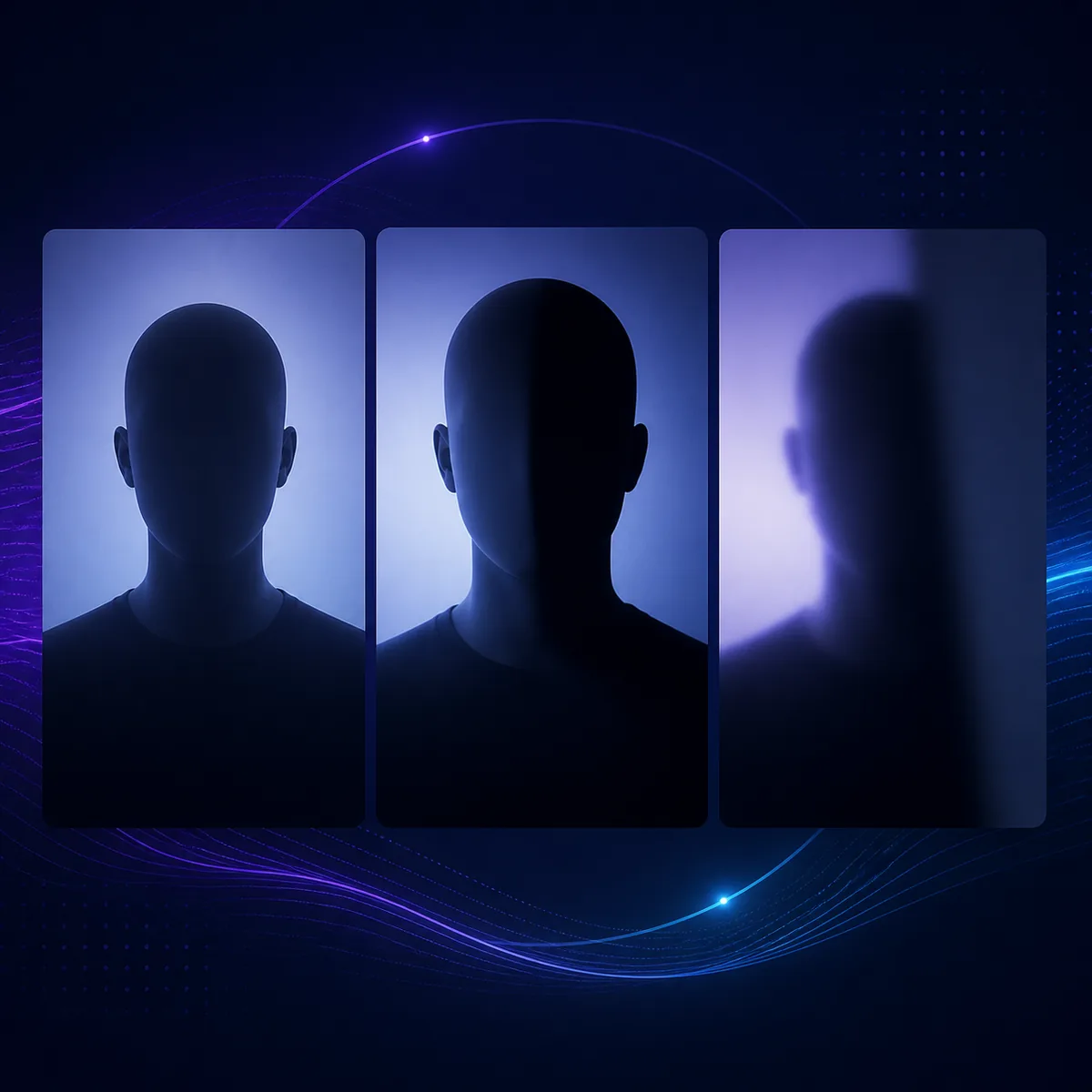
The same person can provide very different visual input when lighting, angle, blur, or occlusion changes.
What a face photo cannot tell you
Ethnicity can involve ancestry, culture, language, family history, community, and self-identification. A face is not a complete measure of any of those things. Even when a visual guess happens to resemble a person's family background, the coincidence does not turn the method into proof.
Nationality is also different. It usually describes a legal or civic relationship with a country, while an AI photo estimate describes a visual impression. The same warning applies to race labels and identity claims. A model should never be used to classify a stranger, make a decision about access or status, or tell someone who they are.
The boundary to remember
A photo-based ethnicity estimate is about the appearance of one image. It is not a DNA result, a citizenship check, a race classification, or a verdict about personal identity.
AI photo estimate vs DNA ancestry test
The clearest difference is the evidence source. An AI photo tool analyzes an image. A DNA ancestry service analyzes selected genetic markers from a biological sample and compares them with reference populations. Both can involve statistical modeling and uncertainty, but they answer different questions because they start with different inputs.
If your goal is family-history research, a DNA report may offer ancestry clues that a photo cannot. It still does not define culture, citizenship, or identity, and its estimates depend on the provider's reference data. Family records and lived context remain important. If your goal is quick visual curiosity, a photo tool may be a lightweight experiment, as long as it is labeled honestly.
| Question | AI photo estimate | DNA ancestry test |
|---|---|---|
| What does it use? | Pixels, framing, and visible patterns | Genetic markers from a biological sample |
| What does it fit best? | How an image may look to a visual model | Possible inherited ancestry connections |
| Can it prove nationality? | No | No; nationality is not a DNA percentage |
| Can it define identity? | No | No; identity includes personal and social context |
| Why can it change? | A different photo or model output | Reference panels and statistical updates |
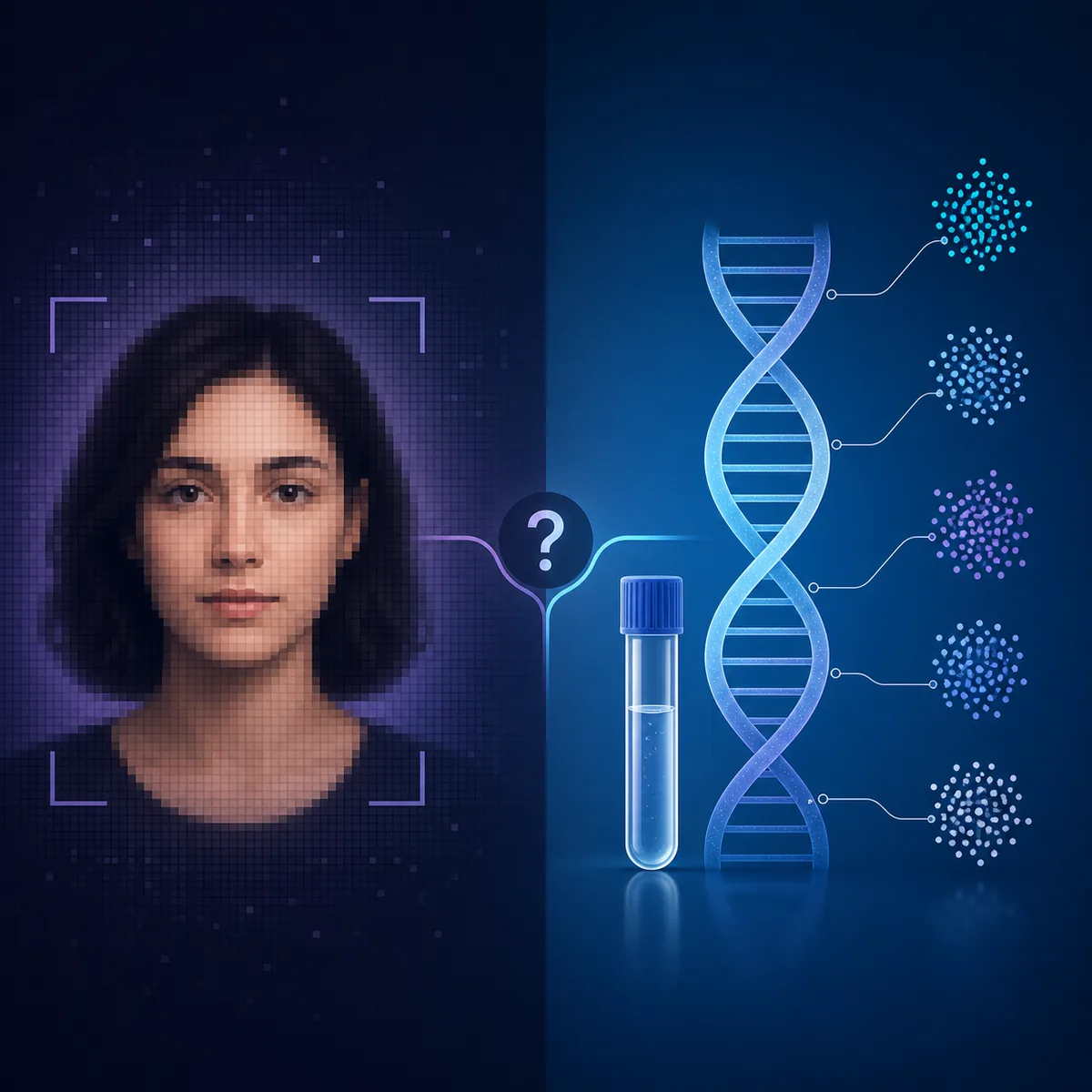
A photo estimate and a DNA ancestry estimate use different evidence, so they should not be treated as interchangeable.
How to read a photo-based result responsibly
Treat the result as a prompt for a better question, not as the final answer. A useful result page should tell you what input it used, what its categories mean, and whether the output is a broad resemblance signal or a claim that goes beyond the evidence. If those details are missing, lower your confidence rather than filling the gap with the model's tone.
It is also reasonable to disagree with a result. Your self-identification and family history do not become less valid because a model chose a different visual label. The model is describing an image; you are describing a life.
- Check the wording Look for estimate, appearance-based, or visual language. Be cautious with proof, exact ancestry, or identity claims.
- Check the input Ask whether lighting, angle, expression, filters, and image quality could have affected the output.
- Check the purpose Use the result for curiosity or reflection, never for deciding another person's identity, rights, or status.
- Check other evidence For ancestry questions, compare family records, relatives' stories, and reputable DNA information rather than repeating the same photo.
Privacy and safer use
A face photo is personal information, so read the site's privacy notice before uploading. Check whether images are stored, how long they are retained, whether they are used to improve models, and how deletion requests work. Do not upload someone else's image without permission, and do not treat a public photo as permission to infer sensitive background.
The safest product language is narrow and transparent: it explains the visual nature of the estimate, the limits of the categories, and the possibility of error. A responsible user applies the same standard. Curiosity is fine; certainty about another person is not.
- Use your own image Only upload a photo you have the right to share and understand how the service handles it.
- Do not identify strangers A face estimate should not be used to infer a stranger's ethnicity, nationality, race, or identity.
- Keep sensitive decisions out of it Never use a visual guess for hiring, school, housing, law enforcement, eligibility, or access decisions.
- Prefer evidence that matches the question Use DNA and genealogy for ancestry research, official records for legal status, and self-identification for personal identity.
Frequently Asked Questions
The honest answer is narrower than the headline
Can AI detect ethnicity from a photo? It can produce a visual estimate from the patterns visible in one image. It cannot verify ethnicity, read DNA, determine nationality, or decide identity. Photo conditions, training data, and model categories all affect the output, so even a polished result should remain provisional.
If you want to explore what a clear portrait may look like to an AI model, use the photo tool with that boundary in mind. If you want to understand inherited ancestry, combine DNA information with family history and records. Matching the evidence to the question is more useful than asking a face to answer everything.
References
- NIST: Face Recognition Technology Evaluation and demographic-effects research. View source
- MedlinePlus Genetics: how genetic testing works. View source
- MedlinePlus Genetics: direct-to-consumer genetic testing considerations. View source
- National Human Genome Research Institute: ancestry and genetic variation. View source
About the Author
Sophie Laurent
Sophie Laurent writes about identity, ancestry, family history, and the practical limits of AI and DNA tools. Her work helps readers separate visual curiosity, genetic evidence, family records, and the parts of identity that no model can define for them.
Last updated: Updated August 22, 2026