Can You Do a DNA Ethnicity Test Without Mailing to a Lab?
What photo-based AI can suggest, what DNA testing actually measures, and why a visual guess is not a substitute for inherited ancestry evidence.

In this guide
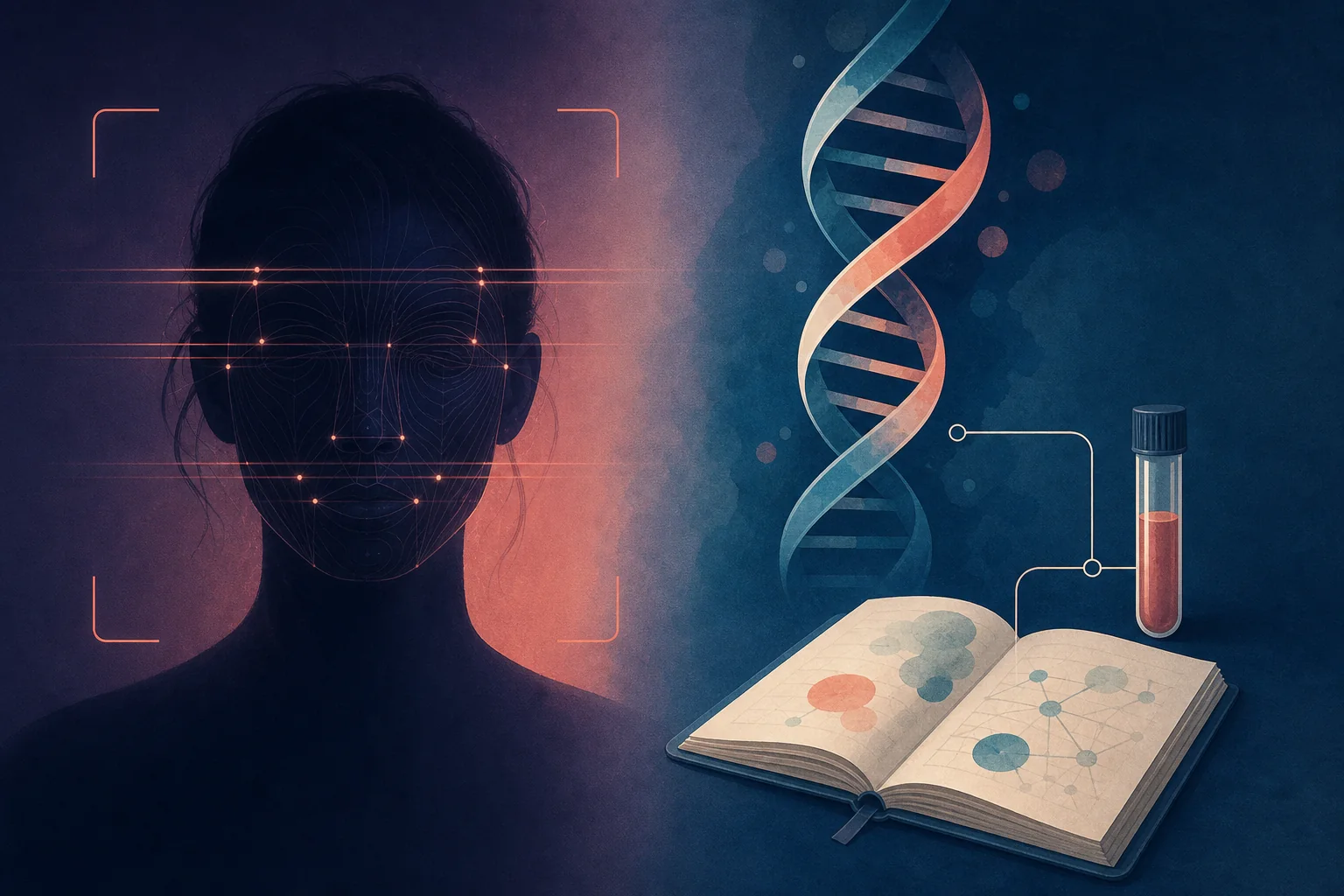
Searches for a DNA ethnicity test often mix two different goals: getting a quick impression from a face and learning about inherited ancestry. Both can be interesting, but they rely on different evidence. This guide explains why a reliable DNA estimate normally requires a biological sample, how reference populations shape the result, and when an AI photo tool is useful only as a visual curiosity.
Quick answer: a reliable DNA estimate needs DNA
There is no reliable shortcut that can produce a genuine DNA ethnicity estimate from a selfie, a name, or a face alone. A consumer DNA test usually requires a saliva or cheek-cell sample that is processed by a laboratory. The laboratory reads selected genetic markers and compares them with reference populations to produce an ancestry estimate.
AI photo tools do something else. They analyze visible patterns in an image and may offer an appearance-based guess. That can be a fast way to explore the question what ethnicity do I look like, but it cannot reveal inherited markers, identify a legal nationality, confirm a family tree, or replace genetic testing.
Key Takeaway
If the question is about inherited ancestry, use DNA plus family history and records. If the question is about a quick visual impression, label an AI result as appearance-based and treat it as uncertain.
What does a DNA ethnicity test actually measure?
An ancestry estimate is a statistical comparison, not a direct reading of an ethnicity stored in one gene. Testing companies examine many genetic variants and ask which reference populations your pattern most closely resembles. The result is then reported as regions, communities, or percentage ranges, depending on the provider.
That makes DNA useful for inherited ancestry clues, but it does not turn a person into a percentage. Culture, language, family belonging, citizenship, and self-identification are real parts of identity that a genetic model cannot measure by itself.
- Genetic markers Selected variants across your DNA provide the evidence used by the testing model.
- Reference populations Your markers are compared with people or datasets representing particular geographic or historical populations.
- A probability-based estimate The output reflects model fit and available data, so it can include uncertainty and change as methods improve.
Why does mailing a sample matter?
The sample is not a ritual or a marketing detail. It is the source of the biological information that the ancestry model needs.
1. Collect a sample
A kit normally collects saliva or cheek cells. The sample contains your DNA, while a photo contains only visible pixels and lighting conditions.
2. Process genetic material
A laboratory extracts and reads selected parts of the sample. The exact markers and test design vary by provider and test type.
3. Compare with reference data
An algorithm compares your genetic pattern with reference populations. The quality and geographic coverage of those references affect the result.
4. Report an estimate
The provider summarizes the model output as regions, communities, ranges, or percentages. It is evidence about ancestry, not a legal identity certificate.
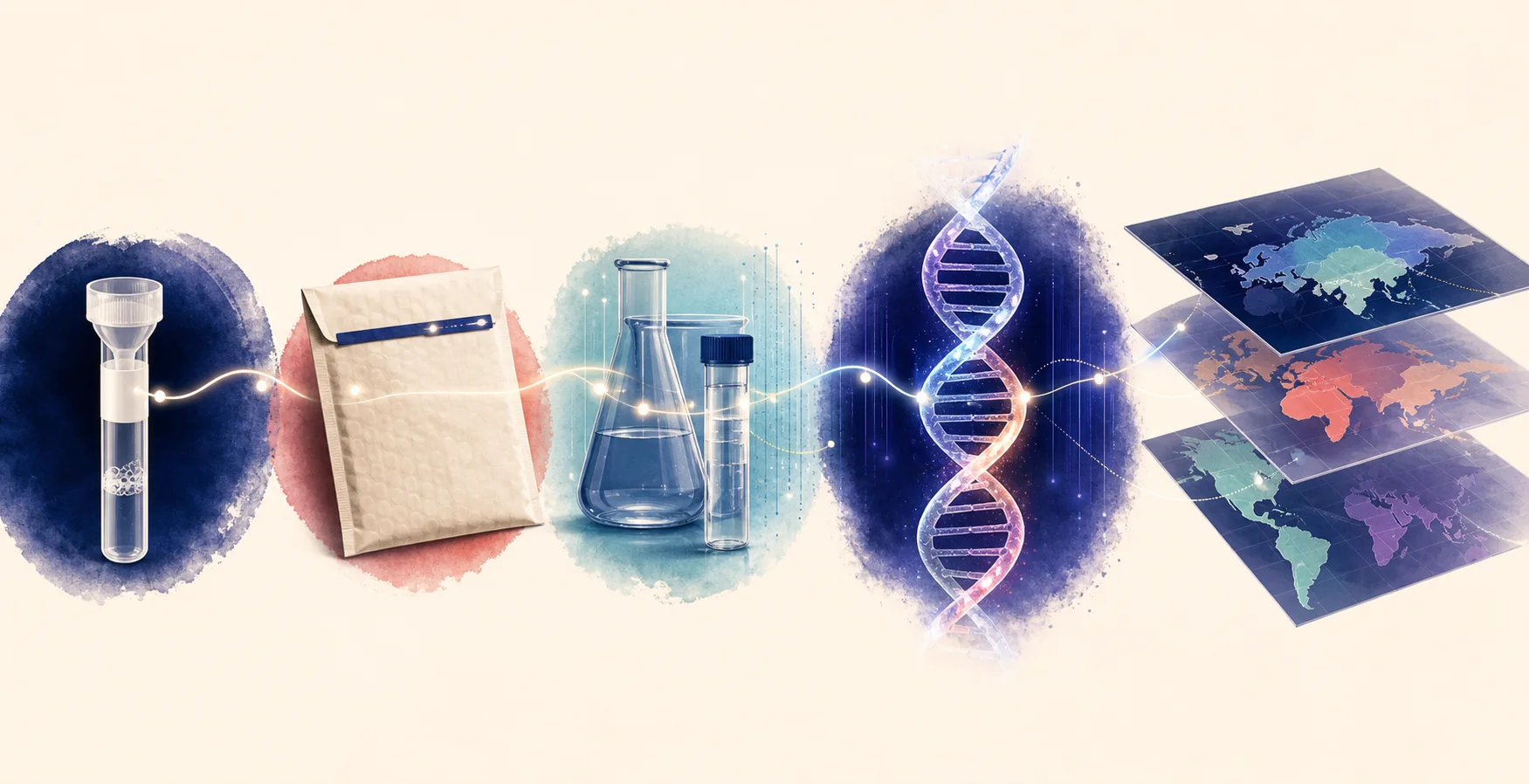
A DNA ancestry estimate depends on a sample, laboratory analysis, and comparison with reference populations.
Do you need DNA for an ethnicity estimate?
If by ethnicity estimate you mean an estimate of inherited ancestry, yes: DNA is the relevant evidence source. Family documents, oral history, surnames, migration records, and genealogy can add context and sometimes challenge an estimate, but they are not a substitute for genetic data when the goal is a DNA-based model.
If you only want to explore how an image may be perceived, you do not need DNA. An AI ethnicity or nationality-style photo tool can provide a quick appearance-based output, as long as the page and the user understand its limits.
| Method | Main input | Best-fit question | What it cannot prove |
|---|---|---|---|
| DNA ancestry test | Saliva or cheek-cell sample | What inherited populations might be represented in my DNA? | It cannot define culture, citizenship, or personal identity. |
| Family history research | Records, relatives, names, and places | How does my ancestry connect to real people and events? | Incomplete records can leave gaps or family myths. |
| AI photo tool | A face image | What ethnicity might I look like to a visual model? | It cannot read DNA or verify ethnicity, nationality, or identity. |
| Surname or name search | A name and historical sources | What origins may be associated with this family name? | Names can change, travel, be adopted, or be shared by unrelated families. |
AI photo guess vs DNA test: which answers your question?
The clearest difference is the input. An AI photo tool sees an image; a DNA test analyzes inherited genetic markers. A photo may reflect lighting, camera angle, hairstyle, age, expression, and the model's training data. A DNA estimate is also imperfect, but its evidence source is biological and its limitations can be discussed in terms of reference panels and statistical fit.
Neither method should be used to assign a person a racial category, infer a stranger's background, or make a legal decision. The safest way to use a photo result is as a prompt for reflection or curiosity, while the safest way to use a DNA result is as one piece of ancestry research rather than a replacement for lived identity.
| Question | AI photo tool | DNA ancestry test |
|---|---|---|
| What ethnicity do I look like? | Possible appearance-based guess | Not designed for this question |
| What inherited ancestry regions might I have? | Cannot measure this | Best fit, with model limits |
| Can it prove my nationality? | No | No; nationality is civic or legal, not a DNA percentage |
| How quickly can I see an output? | Usually seconds | Usually after sample processing |
| Does the result define my identity? | No | No; it is one evidence source among many |
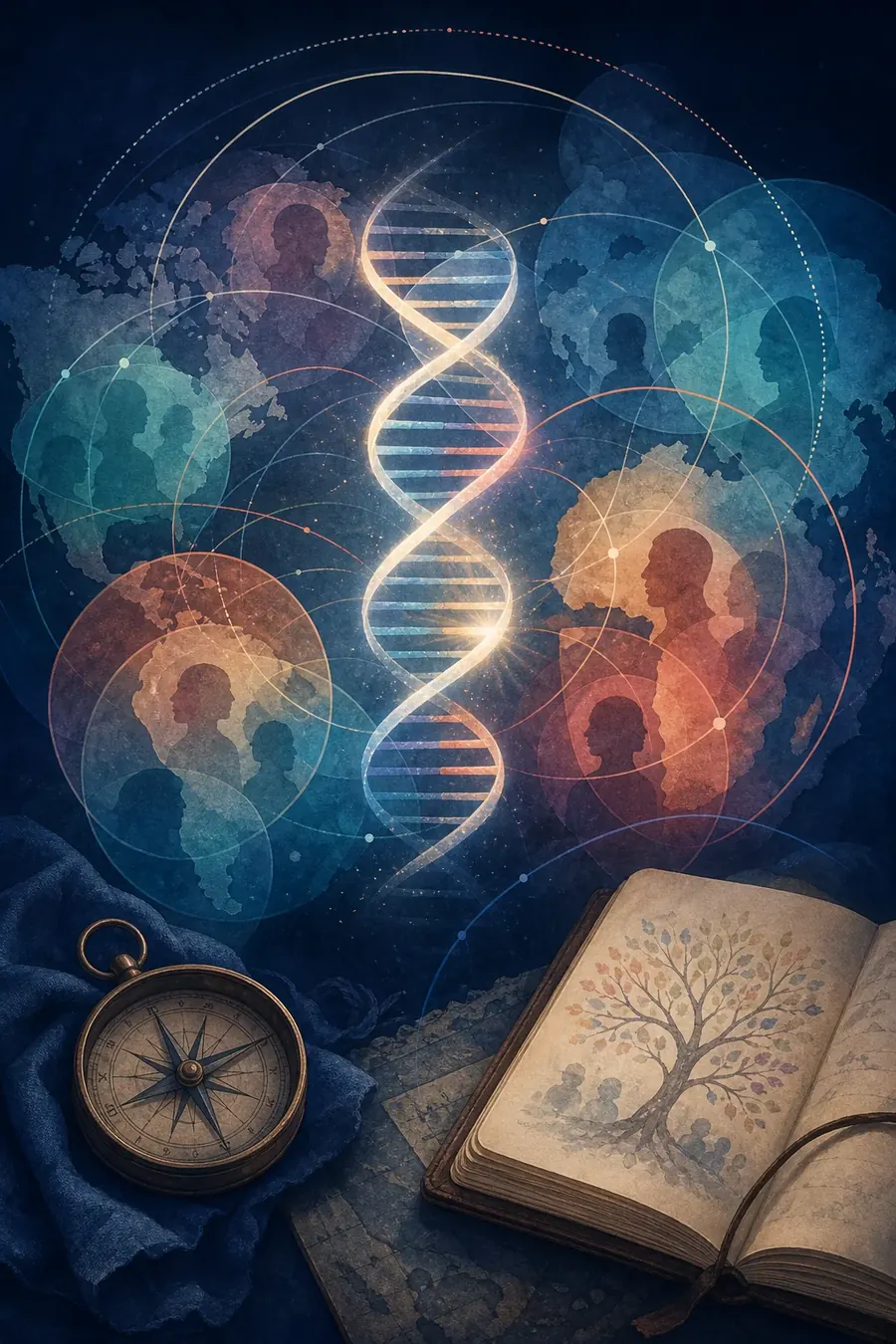
An ancestry percentage is a model-based estimate, not a permanent label or a measurement of cultural identity.
Why can DNA ethnicity percentages change?
A changed estimate does not mean your DNA changed. It usually means the model or the comparison data changed.
- Reference panels grow New samples can make a provider distinguish regions that were previously grouped together.
- Algorithms are updated A revised model may assign the same markers differently or show a range instead of a single number.
- Neighboring populations overlap Historical migration and shared ancestry can make nearby regions statistically difficult to separate.
- Small percentages are less stable A low-percentage result may be more sensitive to model changes than a broad, well-supported signal.
Privacy, nationality, and identity limits
Before using any genetic service, read its current privacy terms, consent choices, data retention policy, research options, and deletion process. A DNA sample is sensitive personal information, and different providers may offer different controls. This article is educational, not legal or medical advice.
It is also important to keep three ideas separate. Genetic ancestry describes patterns of inherited markers. Ethnicity can describe cultural or historical belonging. Nationality usually refers to a legal or civic relationship with a country. A model that estimates one should not be presented as proof of the others.
- Ask what happens to the sample Check storage, destruction, research consent, and whether you can change your choices later.
- Avoid identity claims Neither a face model nor a DNA percentage should be used to identify a stranger or assign a legal status.
- Add human context Family stories, records, community, language, and self-identification help interpret ancestry without reducing a person to a score.
Which method fits your goal?
Start with the question you actually want answered, then choose the evidence source that can reasonably address it.
Choose an AI photo tool for quick visual curiosity
Use it when you want to explore what ethnicity you may look like in a photo. Use a clear image, expect uncertainty, and describe the output as an appearance-based guess.
Best fit: fast, lightweight exploration with no claim about inherited ancestry.
Choose DNA testing for inherited ancestry clues
Use a reputable genetic-testing service when you want a model based on biological markers. Read its reference-population explanations and privacy terms before sending a sample.
Best fit: ancestry research that can be combined with family history and records.
Choose genealogy for family context
Use documents, relatives, archives, and migration records to understand the people and places behind an estimate. This often turns a percentage into a more meaningful story.
Best fit: verifying, questioning, and humanizing genetic results.
Frequently Asked Questions
The honest answer is to match the tool to the evidence
You cannot get a reliable DNA ethnicity estimate from a face alone. A mailed saliva or cheek-cell sample gives a laboratory and an ancestry model the biological evidence they need, while family research supplies the historical context that percentages cannot provide.
An AI ethnicity test still has a place when the goal is a quick visual impression. Keep the boundary clear: AI photo results describe how an image may be read, while DNA tests estimate inherited ancestry. Neither one decides who you are.
References
- MedlinePlus: how genetic testing works and what a test can measure. View Source
- MedlinePlus: direct-to-consumer genetic testing considerations. View Source
- National Human Genome Research Institute: ancestry and human genetic variation. View Source
- AncestryDNA: overview of genetic ancestry testing and estimates. View Source
About the Author
Sophie Laurent
Sophie Laurent writes about identity, ancestry, family history, and the practical limits of AI and DNA tools. Her work helps readers separate visual curiosity, genetic evidence, family records, and the parts of identity that no test can define for them.
Last updated: Updated August 18, 2026