Phenotype Guesser Guide: How to Read Appearance-Based Ethnicity Results
A practical, cautious guide to phenotype guessers, facial feature clues, DNA ancestry, and what a photo can never prove

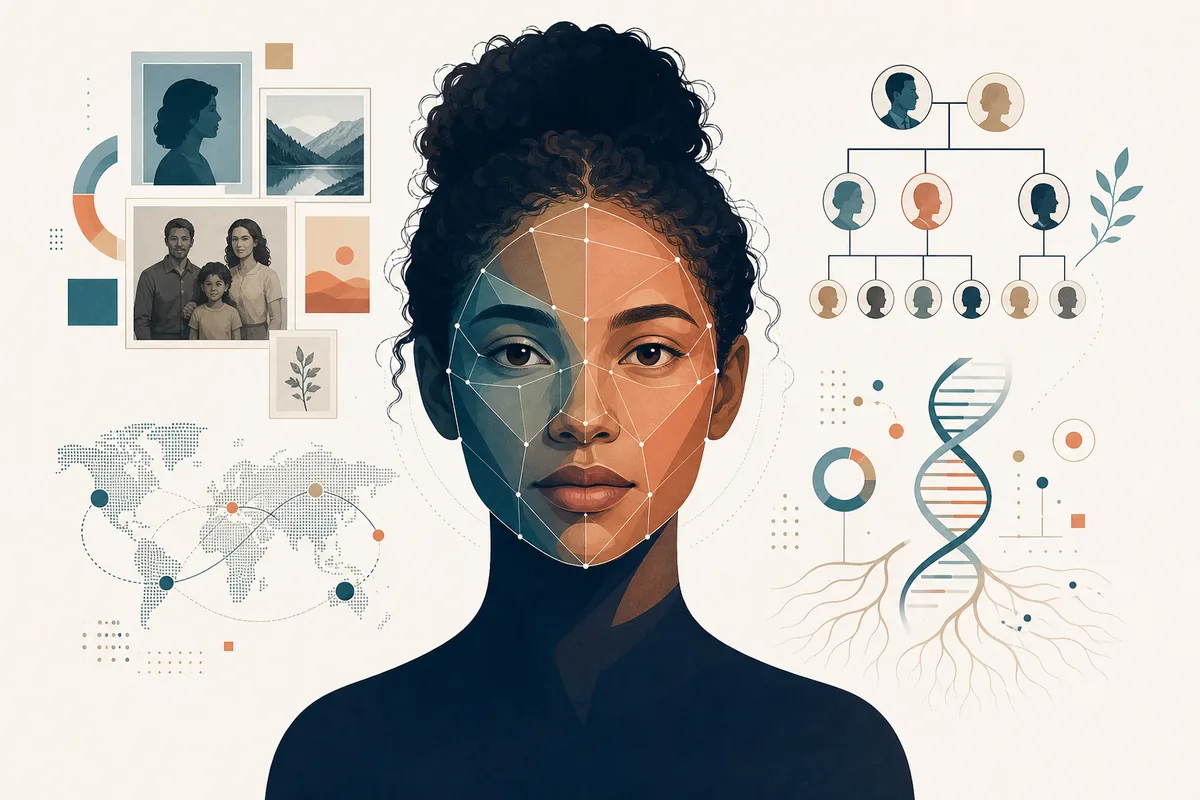
Table of Contents
Searches for phenotype guesser, pheno guesser, and ethnoguess usually come from the same curiosity: people want to know what their visible facial features might suggest about ethnic appearance. That question can be interesting, but it needs careful framing. A photo-based result is not a DNA report, not a passport, not a cultural identity, and not proof of belonging to any group.
Quick Answer: A Phenotype Guesser Estimates Appearance, Not Identity
A phenotype guesser looks at visible traits in a photo, such as face shape, eye area, nose structure, skin tone, hair cues, and overall proportions. It then compares those visual patterns with examples it has learned from other faces.
That makes it useful for the question what ethnicity do I look like in this image. It is much weaker for questions like what is my real ancestry, what nationality am I, or what group should I identify with. Those require DNA, family history, documents, culture, and personal context.
Key Takeaway
Treat a phenotype guesser as a visual curiosity tool. Use it to explore appearance, not to define yourself or anyone else.
What Does Phenotype Mean?
In genetics, phenotype means observable traits. That can include visible features like height, eye color, hair texture, facial structure, and other traits that can be seen or measured. The National Human Genome Research Institute describes phenotype as observable traits shaped by both genetic makeup and environment.
When people use the phrase phenotype guesser online, they usually mean a tool or community game that guesses broad ancestry, ethnicity, or regional appearance from visible traits. The word sounds scientific, but most casual tools are not measuring your full phenotype in a laboratory sense. They are making an appearance-based comparison from a photo.
This distinction matters because appearance is only one layer of identity. Two siblings can have different visible traits. People with mixed heritage may resemble one side of the family more strongly in one photo. Lighting, angle, age, styling, and expression can all change the result.
How a Phenotype Guesser Reads a Face Photo
Different tools use different models, but a responsible explanation usually follows the same broad flow.
1. Detect the face
The system first finds the face and estimates key landmarks around the eyes, nose, mouth, cheeks, and jaw. Poor lighting, blur, sunglasses, heavy filters, or extreme angles can reduce reliability.
2. Compare visible patterns
The tool looks for statistical patterns in visible facial proportions and surface cues. These patterns may correlate with population-level appearance, but they do not equal ancestry.
3. Return broad labels or probabilities
Some phenotype guessers return one label, while better tools return a ranked estimate or confidence range. A ranked result is more honest because real faces rarely fit one simple category.
4. Depend on training data
The result reflects what the model has seen before. If a group is underrepresented, mislabeled, or too broadly grouped, the output can become vague or biased.
Do You Need DNA to Know Your Phenotype?
You do not need DNA to describe visible phenotype. Anyone can observe hair color, eye shape, face proportions, and skin tone. But you do need stronger evidence if your question is about inherited ancestry rather than visible appearance.
A DNA ancestry test studies genetic markers. A phenotype guesser studies a photo. Those two sources can sometimes point in similar directions, but they are not measuring the same thing. For example, a person may have ancestry from several regions while visually resembling only one side of the family.
| Question | Best evidence | Why |
|---|---|---|
| What do I look like in this photo? | Phenotype guesser or AI photo tool | It reads visible traits from the image. |
| What ancestry did I inherit? | DNA test plus family records | It uses genetic markers and historical context. |
| What ethnicity am I culturally? | Self-identification and family/community history | Culture is lived, learned, and personal. |
Why Phenotype Guesser Results Change Between Photos
If one selfie gives one result and another photo gives a different result, that does not automatically mean the tool is broken. The input changed.
- Lighting changes skin tone and contrast. Warm indoor light, shadows, and overexposure can shift the visual cues a model relies on.
- Angles change facial proportions. A low camera angle can exaggerate jaw shape, while a wide-angle lens can distort the nose and midface.
- Styling adds cultural signals. Hair, makeup, facial hair, clothing, and accessories can influence human perception and sometimes model outputs.
- Mixed heritage is visually variable. People with mixed backgrounds may show different family traits across age, expression, or photo quality.
How to Read a Phenotype Guesser Result Without Overinterpreting It
First, read the result as apparent resemblance, not truth. A label such as Mediterranean, East Asian, West African, or Slavic-style appearance should be treated as a visual comparison, not a claim about your family tree.
Second, pay attention to confidence. A result with low confidence should be read as weak. Even a high-confidence photo result still cannot prove ancestry because it is based on surface appearance rather than inherited markers.
Third, compare multiple photos only for curiosity. If the same broad pattern appears across clear, natural images, it may reflect how your features are commonly perceived. It still does not replace DNA, records, or your own identity.
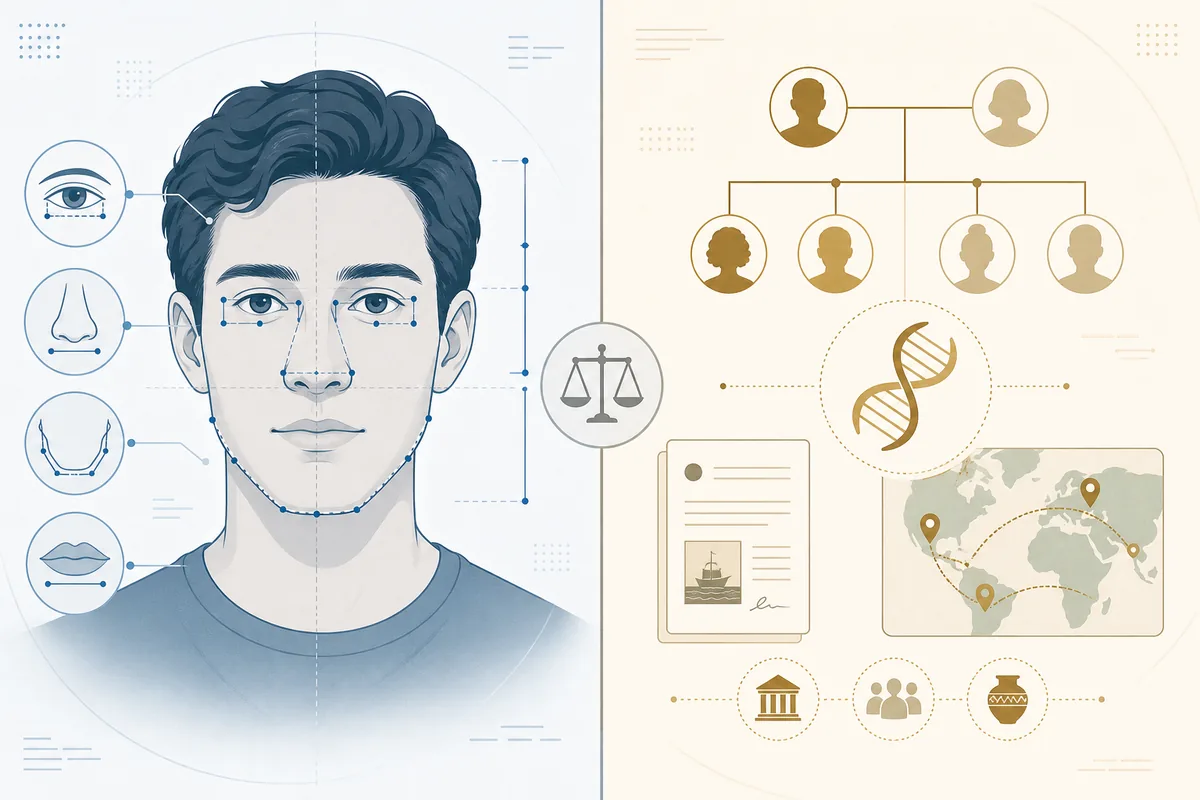
A phenotype guesser reads visible appearance. DNA tests and family records answer a different, deeper ancestry question.
The Best Evidence Mix for Ethnicity and Appearance
The strongest answer depends on the question you are actually asking.
Use a phenotype guesser for appearance curiosity
It is good for a quick, visual answer to what do I look like from this photo?
Best when you keep the result playful and non-final.
Use DNA for inherited ancestry clues
DNA can suggest population matches and inherited regions that are not visible in a single image.
Best when paired with provider confidence notes and family history.
Use records and relatives for real context
Birth records, migration documents, surnames, languages, and family stories turn abstract labels into a grounded history.
Best for understanding identity beyond appearance.
Phenotype Guesser vs DNA Test vs Ethnicity Identity
These sources can complement each other, but they answer different questions.
| Question | Phenotype guesser | DNA or records |
|---|---|---|
| What ethnicity do I look like? | Strong fit | Only indirect |
| What ancestry did I inherit? | Weak fit | Strong fit |
| Can this prove nationality? | No | No, documents decide nationality |
| Can this define my identity? | No | Only part of a wider personal story |
Frequently Asked Questions
Use Phenotype Guessers Carefully
A phenotype guesser can be fun and educational when it stays in its lane: visible appearance. It can help you think about how facial features are perceived, why photos change results, and why broad labels are never the whole story.
For deeper ancestry questions, combine a photo estimate with DNA, family records, cultural context, and your own self-understanding. The most honest answer is rarely one label. It is a layered story.
References
- National Human Genome Research Institute: phenotype glossary definition. View Source
- MedlinePlus Genetics: consumer-friendly genetics and human traits resources. View Source
- National Human Genome Research Institute: ancestry and genetics glossary background. View Source
About the Author
Sophie Laurent
Sophie Laurent writes about identity, ancestry, family history, and the practical limits of AI tools. Her work helps readers separate curiosity, appearance, records, and genetic evidence when exploring ethnicity or heritage.
Last updated: Updated June 24, 2026